

Hayes Door and Window
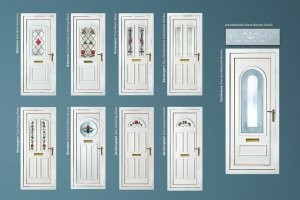
No matter if you're replacing an existing front door or installing a new one, it's crucial to select a high-quality door. Hayes Door and Window offers various high-quality, elegant upvc door styles that improve the exterior appearance of your home.
Contact us now for more details.
The History of Hayes Place
Hayes Place's past is complex and lengthy. It begins with a new double house built by Robert Hall opposite Hayes Church in about 1600 on the site of Asshleys. In the next century, it was to undergo many changes, including becoming a home for Sir Stephen Scott.
Hayes Place is a large mansion situated at the top of an hill in Redlands. The area is a crowded commuter hub for workers in the city's surrounding areas It's also a nice location to live in.
It was originally built as a private residence by Mary Folsom Hayes Chynoweth, who claimed to be a faith healer. The iron-rich Wisconsin mining fortune enabled her and her children to afford the massive mansion.
After her death, the property was sold to a man who was a banker named Everard Hambro in 1880. To remodel the house, Hambro hired George Devey, an architect.
The west side of the house was transformed with the additions of a new entrance hall, dining area , and terrace. He also upgraded the front doors, windows, and installed an electric lighting system.
The house was described as built in two linked wings of stock brick and stone. It was a porch as well as a large central hallway which was separated by a narrow hall.
The house was expanded in 1926 it became the main administrative structure of the University of Buffalo, now called Hayes Hall. Its distinctive clock tower and Westminster Chimes remain an iconic symbol on the South Campus.
Today, the family that owns the mansion is deeply concerned about its history and the legacy it left to the community. They plan to spend $43.5 million in order to restore it, and will hold the grand opening in September.
Until then, there are several ways to visit the mansion. Visitors can purchase a permit to see the first and second floors as well as the cupola.
Another option is to book an excursion through the mansion and the museum that allows visitors to visit areas of the home which are not accessible to the public. This includes the cupola. It is an enclosed space that offers 360-degree views of Spiegel Grove.
The Rectory
A rectory is a house that is maintained for the use of a parish priest, often within a religious organization. It is usually located near the Church, ensuring that members of the congregation can get in touch with the pastor for spiritual or medical assistance.
A number of terms are used to describe a rectory including manse, parsonage, vicarage, and presbytery. The term is also used to describe the home of an rector who's not an adherent of a non-denominational religion.
Rectories are typically sufficient to accommodate clergymen, his or her family, and visiting Church officials, within congregations where priests are allowed to get married. Some rectories also have guest rooms. Others have a dining area where the priest is able to entertain guests.
There are a variety of rectories available in the United States, and some residents choose to reside in them for a variety of reasons. For example some rectories are used for the purpose of housing a church's community office or museum.
Another reason people choose to reside in rectories is because they are typically situated in the middle of a town, which makes it convenient for them to travel to work. In addition they are quieter than other parts of cities.
One of the most well-known Rectories in the region is The Old Rectory, which is currently being refurbished by its owners Margaret and Darren Hayes-Powell. They have spent 18 months renovating the property which is currently for sale at 1.75 million.
They have incorporated an abundance of historic characteristics, such as antique china cabinets and coving, into their design of the house. They also updated the windows, doors and appliances.
This transformation of The Old Rectory was a labor of love, as Darren and Margaret have worked hard to transform the property into something completely new. It is a beautiful property that will appeal to anyone looking to create their own style in Knightwick, Worcestershire.
The building's original design dates to 1755 when the rector Revd William Farquhar, received agreement from the Archbishop of Canterbury to rebuild the house. He gave a plan that describes the construction of the first rectory, as well as plans for the floors, staircases, windows, doors as well as lath and plaster partitions and the Brewhouse.
The Walnut Tree
In the late 18th century Hayes had its own bakery and confectioner. The Walnut Tree on Hayes Street was a popular spot for breakfast or tea, as well as lunches until 2003, when it shut down.
This two-storey house with roof that was hipped was listed as Grade II in 1973. The ground floor is made up of a central doorcase with a flat wood weather hood on brackets, and two curved bow Windows. The first floor features 2 casements and the roof is hipped.
The building is believed have been built in 1790 in 1790, when William Dalton owned the land. In 1841 the property was sold to George Norman of Bromley. The house was the home of a baker until 1895 when it was bought by Charles Whitby.
His son James Whitby, and Arthur Carter who was a newsagent took over the store. He stayed there until the war and then when he returned home to Hayes in 1928 this business was transferred to Ernest Sidney Poynter, who lived here with Elizabeth. The business was then taken over by Peter and Eileen Sheath who operated it for a long time before selling it to Simon and Sarah Butler in 2006.
The staircase in walnut, which has 57 steps, is among the most striking features of the house. It was made of black walnut and butternut and has an as high as 45 feet to the fourth floor.
On the ground floor, there are several rooms that are accessible. The parlor is among them, an office, and an library with 13-foot ceilings. The library also houses the largest-than-life painting of Hayes by William Carl Brown.
Another unique feature is the 12 wooden cases lined with glass where Hayes could display his most treasured souvenirs. They were his "Little Smithsonian"
On the upper floors, there are bedrooms, as well as an attic which is used to store items. Guided tours aren't allowed to enter the third or fourth floors.
The house is classified as a National Historic Landmark and has been visited by more than 32,000 people each year. You can take a guided tour around the house to learn more about Hayes and his time in office. The house is accessible to the public from Monday through Saturday 9 a.m.-5 p.m.
23 Hayes Street
23 Hayes Street, also known as the door and window of the Hayes is one of the oldest structures in the village. It is a two-storey structure that dates from the 18th century and was constructed as a baker's shop. It was used by the village for more than 100 years, but it was closed in 2003 and is now a residential building.
St Mary Cottages was built in 1888. It is comprised of ten cottages. It was designed by George Devey to Sir Everard Hambro. In 1994 the terrace was listed as Grade II.
The cottages have a roof that is steeply pitched with raking queen-struts and straight wind bracing on jowel posts. They are weatherboarded with a square-headed window at each bay , as well as small panes.
new windows hayes contains cottages, as well as a huge garden and basement. The ground floor of the building is used as a gathering space, while the top floor is home to Mr. and Mrs. Clarke who purchased the property in 2004. They have since renovated the house to a very high standard.
Another interesting aspect of this historical building is the chimney stacks that were originally built. These are especially impressive. The roof is also covered with a thick layer of lead.
It is thought that the house was one cottage. It is possible that another cottage was added to the original structure, however it isn't known whether it was related.
The huge central entrance hall is the principal area of the building. It is accessed via the garden, which also houses a small kitchen. The oak entrance door and interior are decorated with the look of that is typical of a Georgian kitchen.
On the top floor, there are three bedrooms which include the master bedroom with a balcony and an the bathroom with an ensuite. There is a bathroom for the family and the kitchen is fully equipped with all the appliances.
The property is situated in a thriving neighborhood that offers residents access to shops, restaurants and other amenities. It is also a short drive from the Civic Center, Octavia Street and Patricia's Green.